Wheeled vs Tracked Excavators: Which Do You Need?
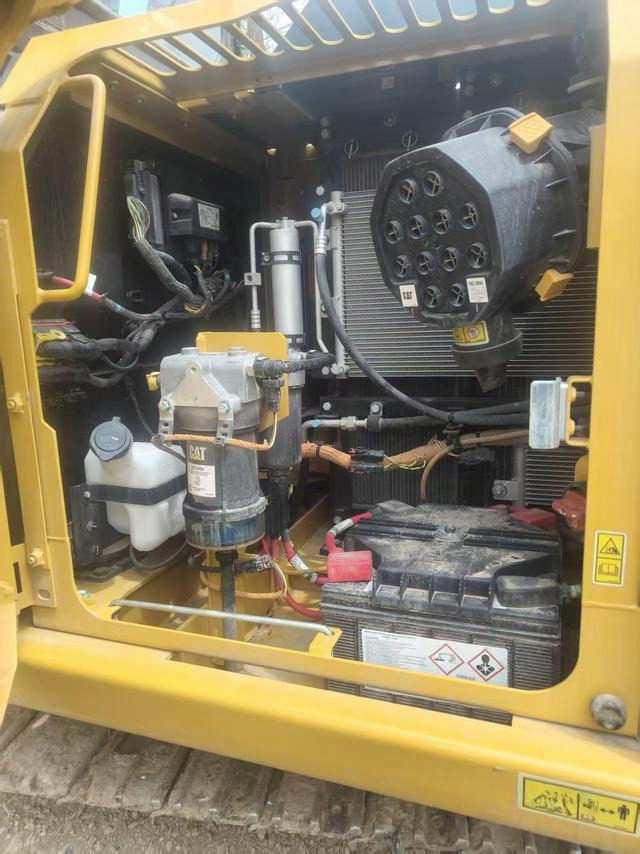
Wheeled or tracked excavator? Compare ground pressure, stability, speed, cost and NZ and Australian road rules, and see which suits your ground.
Wheeled or tracked: which should you buy?
A wheeled excavator is a digger on tyres instead of tracks, so it can travel between sites under its own power. A tracked excavator is a digger on steel or rubber tracks, which grip soft ground better.
For most owner-operators working paddocks and farm ground, tracked is the better buy. Wheels pay off on sealed or firm sites where the machine changes site often.
We sell tracked excavators only, so this guide compares the two honestly and doesn't sell wheels. If you're still choosing between digger types, see excavator vs backhoe loader and excavator vs skid steer.
What's the actual difference?
The digging end is the same, but the undercarriage isn't. A wheeled machine stabilises with outriggers, a dozer blade or axle locks while it digs.
Wheeled excavators also come in a narrower size range. JCB says its wheeled range runs from 10 to 25 tonnes, while tracked machines start at mini sizes. Our size guide covers the tonnage question.
Which is better on soft ground?
Tracked. Ground pressure is the machine's weight divided by its contact area, according to the University of Minnesota Extension. Its guidance is that "wheeled equipment has greater ground pressure than tracked equipment", so it shouldn't be used where compaction is a concern. Wheels also "provide less traction in muddy soils."
Here's a real tracked number. Caterpillar's 320 spec sheet lists 21,300 kg on 600 mm shoes at 44.3 kPa, and 22,000 kg on 790 mm shoes at 34.8 kPa. Roughly the same weight on wider tracks means lower pressure.
The sources give no ground-pressure figure for a wheeled excavator, so this guide doesn't either. The Minnesota page adds that a loaded bucket shifts weight onto the front of a wheeled machine, which raises the pressure again.
Is a wheeled excavator as stable?
The sources describe it differently. Cat's rental guide says a track machine's low centre of gravity and large footprint give it superior traction. JCB calls the two "comparable in stability while working", but says wheeled machines may need outriggers.
Tracks are more forgiving on a slope or a soft patch. Check the lift chart for the exact model, which our weight and specs guide explains.
How far do you actually move it?
This is the question that decides it. On Cat's figures, tracked machines crawl at 4 to 6 mph (roughly 6 to 10 km/h) and wheeled machines travel at up to 22 mph, about 35 km/h. Those are makers' top speeds, not legal limits.
So a wheeled machine can cover road distances that a tracked one usually can't, and a tracked one usually rides a float. Porter Group, a NZ dealer, says crawlers "usually need float haulage between sites", and our shipping guide covers how machines reach a yard.
Can you drive one on the road in NZ and Australia?
Yes, but a wheeled excavator on a public road is a regulated vehicle, not a digger that happens to drive fast.
New Zealand. NZTA says you need the right licence class and an endorsement, T for tracks and W for wheels. The class depends on weight and speed:
| Vehicle | Weight and speed | Class |
|---|---|---|
| Tracked | 18,000 kg or less | 1F |
| Tracked | Over 18,000 kg | 2F |
| Wheeled | 6,000 kg or less | 1F |
| Wheeled | 6,000 to 18,000 kg, up to 30 km/h | 1F |
| Wheeled | 6,000 to 18,000 kg, above 30 km/h | 2F |
| Wheeled | Over 18,000 kg, up to 30 km/h | 2F |
| Wheeled | Over 18,000 kg, above 30 km/h | 4F |
The endorsement goes on top of the class. NZTA is blunt about it: "you can't drive on the road just because you've got the course certificate." "Road" also means anywhere the public has access, including road shoulders, reserves and beaches, and a property without a gate may count. NZTA's construction machines page puts tracked and wheeled excavators under the same rules, so a tracked machine can legally travel by road too.
Check with NZTA before you count on driving one on the road.
Australia. Each state sets its own rules. New South Wales and Queensland both list wheeled and tracked excavators as conditionally registered construction vehicles, not standard ones.
- NSW wheeled: Transport for NSW's wheeled sheet allows no more than 5 km between worksites, except for farming, and requires flashing lights and safety gear such as a horn and mirrors.
- NSW tracked: the tracked sheet restricts it to a defined area or construction zone and says it must not damage the road surface.
- Queensland: the state's conditional registration list shows limited road access for both types.
For any other state, ask that state's road authority.
Which costs more?
The sources look at different costs. Porter says wheeled machines "can cost more upfront" and that tyres wear out sooner than tracks, though transport is cheaper because they rarely need a float. JCB says wheeled machines typically have lower operating costs. None gives a NZ or Australian price.
Compare the specific machines you're pricing, and see our used excavator price guide for what moves the number.
Which do you need?
| Your situation | Better fit |
|---|---|
| Paddock, farm or building section | Tracked |
| Soft, wet or sloping ground | Tracked |
| Rough or uneven ground | Tracked |
| Sealed or finished surfaces | Wheeled |
| Different site every day | Wheeled |
| One site for weeks | Tracked |
| Under 10 tonnes | Tracked |
Ask two things: how often the machine changes site, and what's underneath it. If the answers are "rarely" and "dirt", buy tracked. If they're "daily" and "asphalt", wheels make sense.
What we sell
Every machine we sell is under 6,000 hours. Each one is cleaned and inspected before import and signed off by a qualified engineer, and we inspect and photograph it again before it ships.
Start with our 12 to 15-tonne excavators, including Cat models, or see our excavators.
See the excavators in stock
Browse excavatorsMachines that fit
Caterpillar 313GC
- Year
- 2025
- Hours
- 756
- Tonnage
- 13.8 t
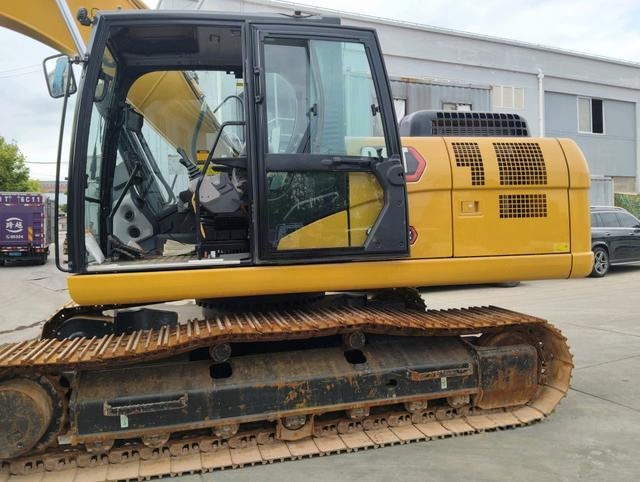
Caterpillar 323GX
- Year
- 2024
- Hours
- 795
- Tonnage
- 21.4 t
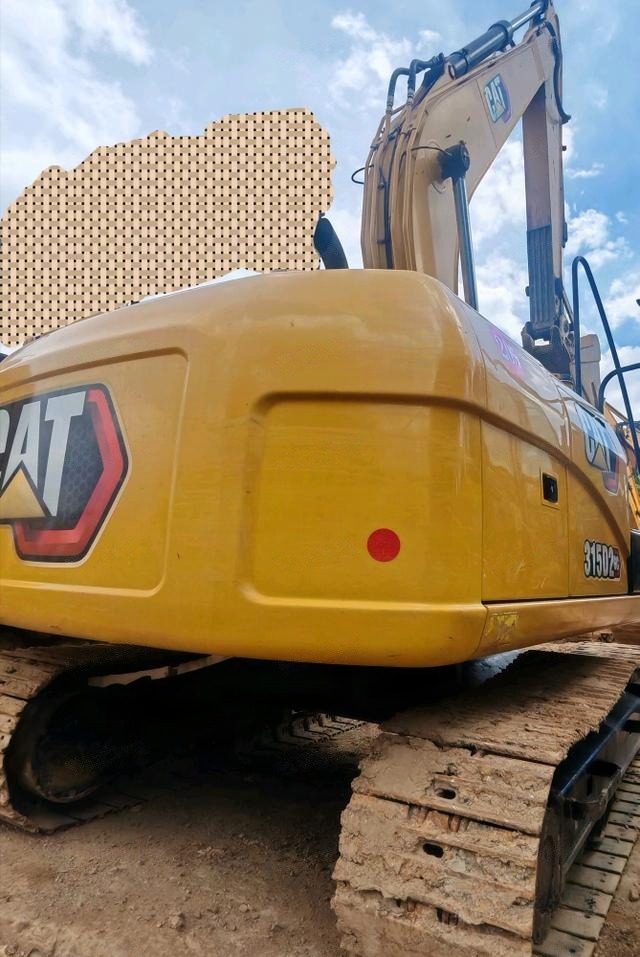
Caterpillar 313D2 GC
- Year
- 2020
- Hours
- 1,600
- Tonnage
- 12.5 t
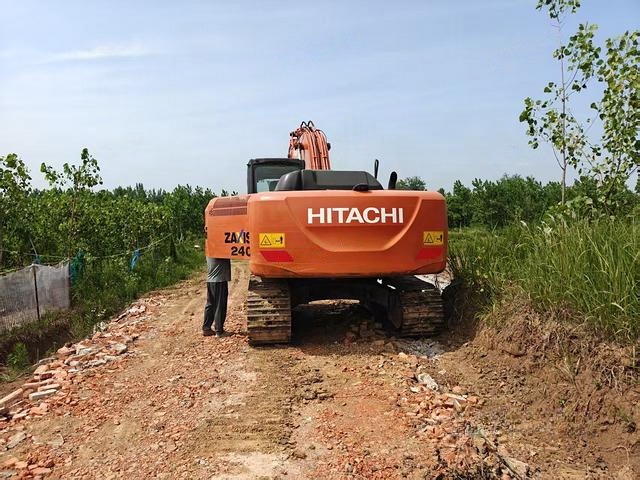
Hitachi ZX200-5A
- Year
- 2022
- Hours
- 1,700
- Tonnage
- 19.7 t
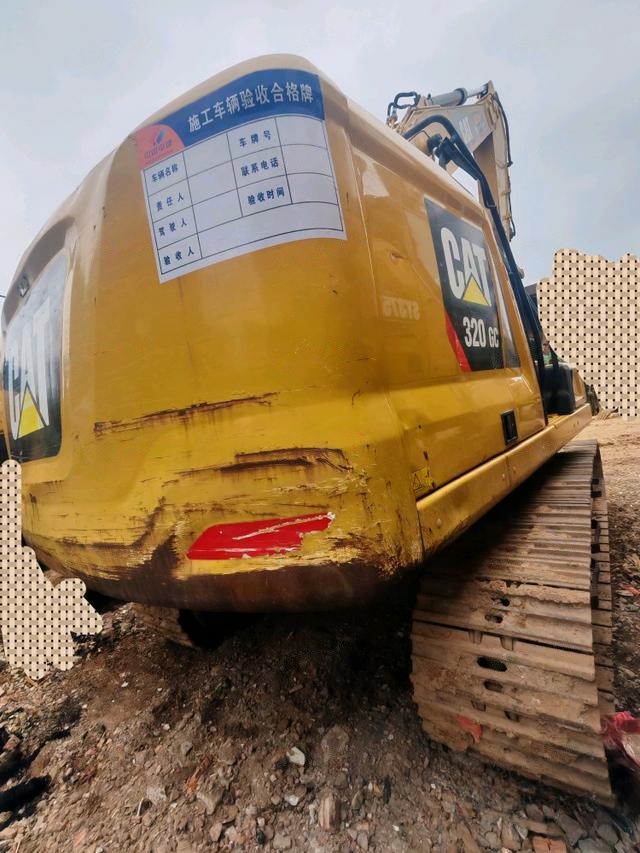
Caterpillar 320GC
- Year
- 2019
- Hours
- 2,350
- Tonnage
- 22 t
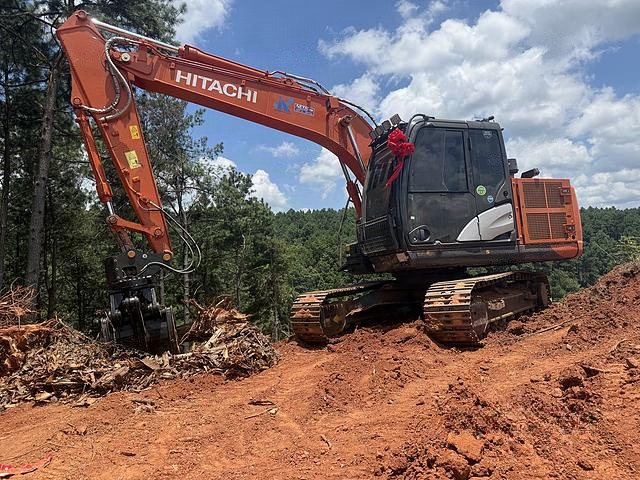
Hitachi ZX120
- Year
- 2019
- Hours
- 3,000
- Tonnage
- 12.5 t
Frequently asked questions
Which excavator is better for city projects?
Wheeled, according to Cat's rental guide, which says wheeled machines suit urban sites where the pavement is already in place. JCB adds that "wheels won't cause damage to asphalt or concrete".