Excavator vs Skid Steer: Which Is Right for Your Site?
Excavator or skid steer? What each does best, how wide they are, what they do to the ground, and when to hire one and own the other.
Digging is a job for an excavator, and moving loose material is a job for a skid steer. Most sites lean one way, and a few need both.
A skid steer is a compact loader that moves and levels loose material, and it turns by skidding its wheels or tracks rather than steering them. An excavator digs with an arm and a cab that rotates 360 degrees.
One note first. Nearly every comparison online sets a skid steer against a mini excavator under about 3 tonnes, but the excavators on our site right now run from 5.4 to 39.7 tonnes. So that's the size we compare here, and we use mini-excavator sources only where the point holds for any tracked digger. We don't sell skid steers.
What does each machine do best?
Bobcat sells both, and its buyers' guide is the best official starting point. It calls the skid steer "about as close to an all-rounder as you'll find on a job site" and the excavator "purpose-built for digging and trenching." Keep in mind it's a skid steer maker's view that covers mini excavators only.
| Job | Better pick |
|---|---|
| Digging holes and trenches | Excavator |
| Footings, and digging over obstacles | Excavator |
| Loading and carrying loose material | Skid steer |
| Finish grading and levelling | Skid steer |
| A shallow trench or light digging | Excavator, though a skid steer can manage a short run |
| Filling a trench back in | Skid steer |
Bobcat's lists and application notes back the first four rows. United Ag & Turf, a John Deere dealer, says light digging is "not their primary purpose" for a skid steer.
How deep can each one dig?
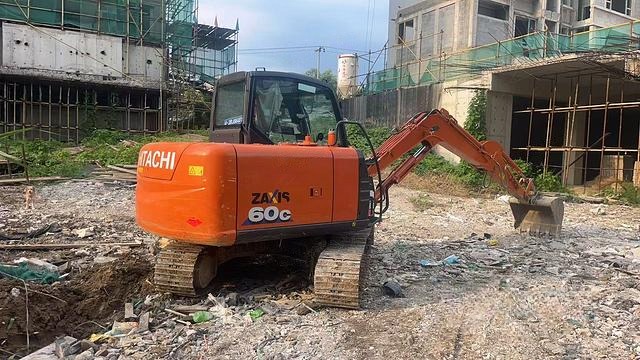
An excavator digs a lot deeper. Caterpillar's published spec sheet for the 313 GC, a 13.3 tonne machine, lists a maximum dig depth of 5.54 metres. Hitachi's ZX60C is 5.4 tonnes, close to the smallest machine we list, and digs to 3.55 metres.
A skid steer isn't built for this, though United Ag & Turf says it can handle "shallow trenching and light digging," such as utility lines a few feet deep or drainage swales.
Whichever machine you use, check for buried services before you dig. WorkSafe NZ's excavation guide asks for a safe system of work first, though the page was last updated in 2017.
If digging wins, our guide on what size excavator you need is the next read.
Will it fit through your gate?
Bobcat says "the site usually dictates the machine: the width of the gate, the surface you need to cross, the volume of material you move daily."
Here are the widths, from Bobcat's compact loader guide and Hitachi's brochure:
| Machine | Width |
|---|---|
| Bobcat S70 skid steer (wheeled) | 0.91 m |
| Bobcat T450 compact track loader | 1.40 m |
| Hitachi ZX60C excavator, 5.4 t | 2.06 m |
Those are the makers' figures for one model each, and other models differ. But the gap is real, because a skid steer gets through gaps a 5 tonne digger won't. Measure the narrowest point on your site before you look at either. Our weight and specs guide explains the other numbers on a spec sheet, and how excavators are shipped to your yard covers getting one to your gate.
Which is gentler on the ground?
Tracks help, but Bobcat says they "lower ground pressure by spreading weight across a larger contact area." It then adds that ground pressure "does not, however, describe what happens during a turn."
The published numbers are close, with Bobcat's T450 track loader at 34 kPa, Cat's 13 tonne 313 GC at 39.7 kPa and Hitachi's 5.4 tonne ZX60C at 30 kPa. So a big tracked digger presses on the ground about as hard as a track loader.
Turning is where they differ, because a skid steer pivots on the spot, which is harder on turf. Bobcat's advice is to plan three-point turns and avoid saturated lawns, while an excavator swings its upper body with the tracks staying put. That last part is our read of the sources, not something either one states.
Rhinox, an attachment maker, says wheeled skid steers can cross tarmac without damage, but steel-tracked machines risk marking it.
What about attachments?
Skid steers are quick at this: Bobcat lists fast attachment changes with its Bob-Tach system as a strength. Excavators run a different set of buckets, breakers, augers, grabs and thumbs that our attachments guide covers in full.
Which suits landscaping and farm work?
Landscaping and site prep often need both jobs, digging first and then moving or levelling. Boyd CAT, a Cat dealer, describes the pairing that way, and Bobcat puts "longer-term excavation projects" on the excavator's side.
On a farm, digging can be the missing piece. One TractorByNet poster said their Kubota "can't dig narrow holes, so removing dirt around rocks and stumps is not practical."
Should you hire one and own the other?
Often, yes. Hirepool says having both can help, since the skid steer fills in what the excavator digs. United Ag & Turf says renting suits one-off or seasonal jobs, and buying pays off if you have regular projects or run a contracting business.
For hire cost, Diggermate says an Australian dry hire of a 1.7 tonne excavator starts from AUD 229 a day, and its skid steer hire starts from AUD 249 a day. Those are small machines from one franchise group, and they say nothing about hiring a 12 tonne digger.
If you're weighing a purchase, see what determines a used excavator's price and what you save buying used.
What we sell
We sell used tracked excavators, not skid steers. Every machine on our site is under 6,000 hours. Each one is cleaned and inspected before import, then signed off by a qualified engineer.
Our smallest machines are in our 4 to 10 tonne excavators. Or see what's on our site right now.
See the excavators in stock
Browse excavatorsMachines that fit
Hitachi ZX60C-6A
- Year
- 2025
- Hours
- 600
- Tonnage
- 5.4 t
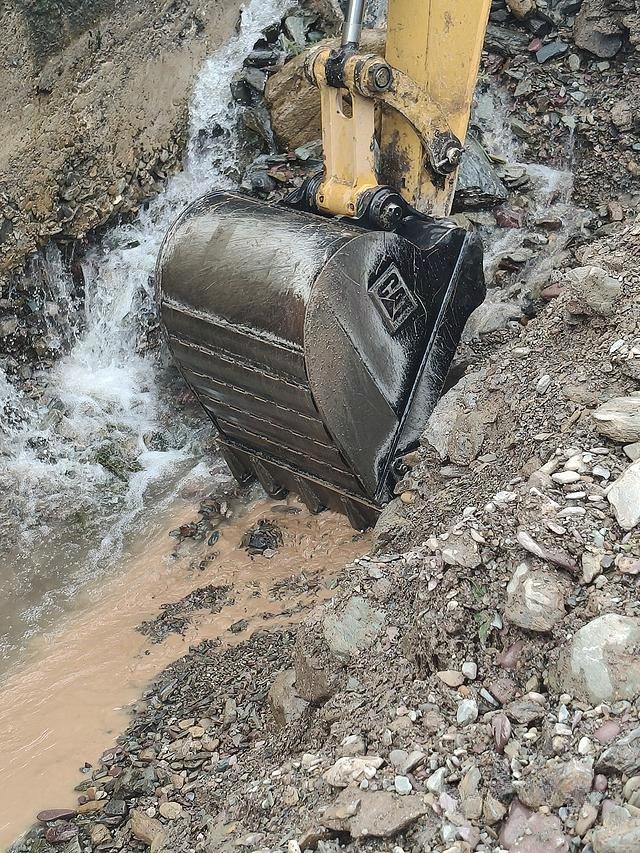
Caterpillar 307
- Year
- 2023
- Hours
- 2,800
- Tonnage
- 8.12 t
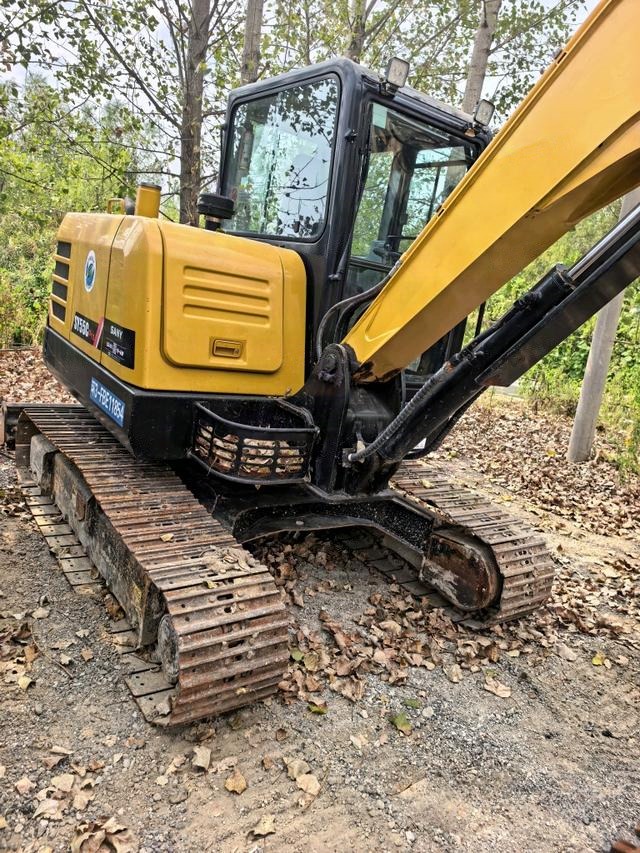
SANY SY55C
- Year
- 2022
- Hours
- 3,700
- Tonnage
- 5.78 t
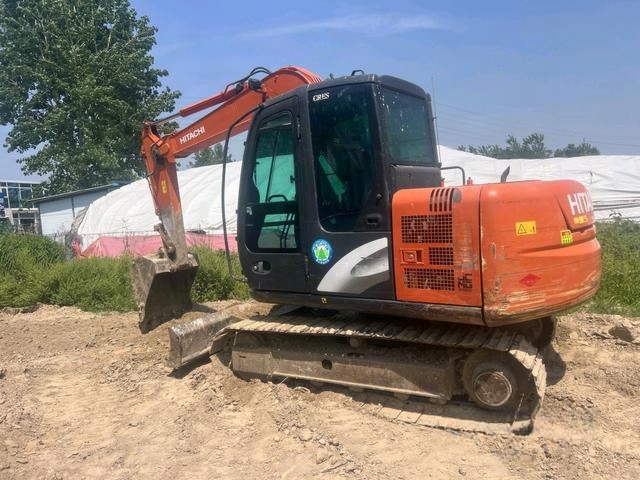
Hitachi ZX70-5A
- Year
- 2020
- Hours
- 4,200
- Tonnage
- 6.7 t
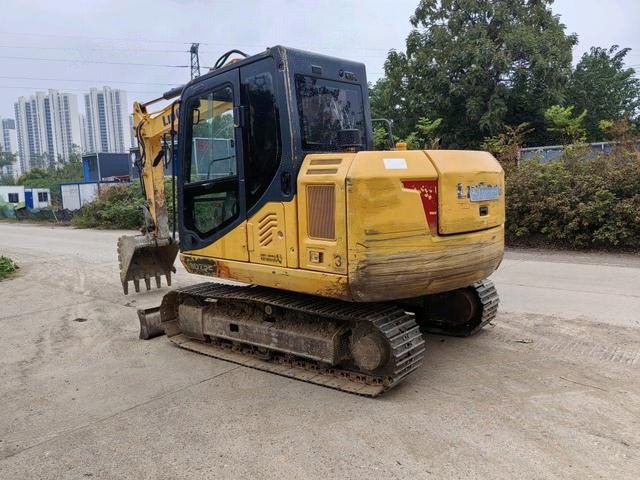
Liugong CLG9075E
- Year
- 2021
- Hours
- 4,500
- Tonnage
- 7.5 t
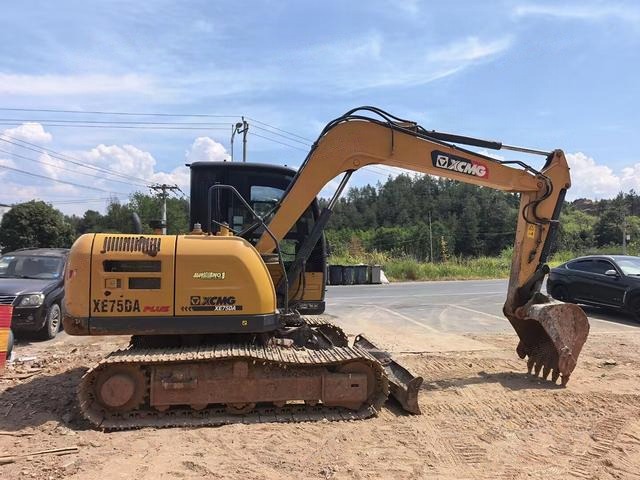
XCMG XE75DA
- Year
- 2022
- Hours
- 5,000
- Tonnage
- 7.7 t
Frequently asked questions
What is a skid steer used for?
Bobcat says it's for moving and levelling loose material, plus loading and general site preparation. FJ Dynamics NZ adds that it turns by skidding its wheels or tracks, which lets it pivot inside its own footprint.
Can an excavator do the same jobs as a skid steer?
Partly. LawnSite posters, who were talking about mini excavators, said they excavate, load spoil, backfill and grade with the excavator and only use the skid steer to move pallets. That's forum opinion. Luby Equipment, a CASE and Takeuchi dealer, says a track loader "may remain the superior option" if your work is mostly bulk material movement.
What should I buy first, an excavator or a skid steer?
Sinkfarm Equipment, a Kubota dealer, says it depends on which task takes most of your time. One LawnSite poster's advice on the excavator side was "don't buy one (just yet). Rent as needed." That's a 2016 US forum view, so treat it as one opinion.