Excavator Bucket Capacity and Reach Explained
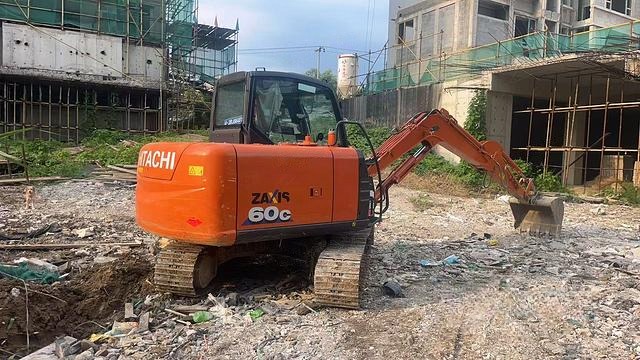
How to read bucket capacity and reach on an excavator spec sheet: heaped vs struck, m3 vs tonnes, truck passes, and how arm length trades reach for force.
What does bucket capacity mean on a spec sheet?
Bucket capacity is the volume a bucket is rated to hold, worked out by a standard method so different buckets can be compared. It isn't a weight. It isn't a promise about what ends up in the bucket either. Reach is how far out from the machine the bucket can dig on level ground.
Most makers quote capacity as heaped. That's the volume level with the top edges (struck) plus a heap piled above, sloping at 1:1, or 45 degrees. Volvo's product guides say it in one line: "Bucket size based on ISO 7451, heaped material with a 1:1 angle of repose." SSAB, a steel maker, says the same about the standards: excavator buckets are mostly rated heaped at 1:1, while loader buckets use a shallower 1:2 slope.
The standard itself is modest. ISO 7451 is meant to give "a conventional means of comparing bucket capacities. It is not intended to be used to define true capacities." SAE J296 does the same job under a US label.
"ISO heaped" and "SAE heaped" are comparable. A "CECE heaped" figure uses the 1:2 slope and reads lower for the same bucket, and Hitachi's ZX200 sheet uses both labels on one page. Bucket types are a separate topic, covered in our attachments guide.
Bucket capacity in m3 versus tonnes
Cubic metres tell you how big the bucket is. The tonnes in each scoop depend on what you're digging. Cat's handbook gives the payload as heaped capacity times a fill factor. Ritchie Bros then multiplies by the material's loose density to get tonnes.
Fill factor is how full the bucket really gets. Cat lists 100 to 110 percent for loose moist loam and 75 to 90 percent for average blasted rock, and says buckets often have fill factors over 100 percent.
Here's what it does to a 1.2 m3 bucket, using loose densities from a Ritchie Bros blog. That's a secondary source, so treat the results as a range:
| Material (loose) | Density | Tonnes in a 1.2 m3 bucket at 100% fill |
|---|---|---|
| Topsoil | 1.1 to 1.3 t/m3 | 1.3 to 1.6 |
| Wet sand | 1.8 to 2.0 t/m3 | 2.2 to 2.4 |
Same bucket, roughly one and a half to one and three-quarter times the weight. That's why makers rate buckets by density too. Hitachi's ZX200 sheet marks each bucket as suited to material of 2,000, 1,600 or 1,100 kg/m3 or less. Its 1.20 m3 bucket sits in the lightest group.
What bucket sizes are on our site right now?
Bucket size climbs with machine weight, and so does reach. These are the maker-published figures for machines on our site right now, not measurements of a single machine. A range means the maker offers several buckets or arms.
| Weight band | Machines | Bucket, m3 (maker's listed) | Maker's listed reach, m |
|---|---|---|---|
| Under 6 t | 2 | 0.19 to 0.21 | 5.83 to 6.09 |
| 6 to 10 t | 4 | 0.32 to 0.38 (3 machines) | 6.17 to 6.67 |
| 10 to 15 t | 9 | 0.19 to 0.81 | 7.60 to 8.66 |
| 15 to 20 t | 3 | 0.3 to 1.2 | 8.81 to 9.75 |
| 20 to 30 t | 5 | 0.8 to 1.4 | 9.86 to 10.14 |
One 6 to 10 t machine lists no bucket figure. In the 20 to 30 t band, the Kobelco SK200-10's 9.9 m is the maker's maximum digging reach, the highest-point figure. Its at-ground figure is 9.73 m, so that column isn't strictly like for like. Cat and Hitachi list the at-ground number, and some other listed figures may also be maximum digging reach.
The jump from 6 to 10 t to 10 to 15 t is the big one. If you're still choosing a size, start with what size excavator you need, then browse our 4 to 10 tonne or 12 to 15 tonne machines.
How do you match a bucket to a truck?
Aim for 3 to 5 passes to fill the truck. Cat says operators should load an articulated truck to capacity in three to five passes, and ten passes wastes time and fuel. Ritchie Bros calls 3 to 5 the usual contractor benchmark.
The sum is truck body volume divided by (bucket volume x fill factor). A 1.2 m3 bucket at 100 percent fill takes 5 passes to fill a 6 m3 body. Check whether the truck's volume is struck or heaped, and check the payload in tonnes against its rating.
Cat's three rules for excavator selection start with the bucket: work out the loose density of the heaviest material you move, then choose a machine that can handle that bucket and load. Lift capacity is its own limit. Cat says the rated load won't exceed 75 percent of the tipping load or 87 percent of hydraulic capacity, so a big bucket isn't free.
What does maximum reach mean?
Maximum reach is the horizontal distance the bucket teeth can extend, and makers label it differently. Cat prints "Maximum Reach at Ground Level". Hitachi prints "Max. digging reach (on ground)". Kobelco prints that figure too, plus a larger "max. digging reach" taken at the highest point. Compare like with like, and don't mix the two.
Depth is a different number on the same diagram. Dig depth, dump height and cutting height each have their own line, and we cover them in digging depth and reach explained.
How does arm length trade reach for force?
A longer arm gives more reach and less digging force. Cat puts it in one line: shorter sticks deliver more digging power, and longer sticks give more reach but less force. Makers' own tables show it:
| Machine (maker) | Arm options | Max reach on ground | Arm force (ISO) |
|---|---|---|---|
| ZX200LC-5G (Hitachi) | 2.42 m / 2.91 m | 9.25 m / 9.75 m | 140 kN / 114 kN |
| SK200-10 (Kobelco) | 2.4 / 2.94 / 3.5 m | 9.24 / 9.73 / 10.17 m | 121 / 102 / 91.8 kN |
| ECR90 (Volvo) | 1.7 m / 2.1 m | 6.80 m / 7.18 m | 44.4 / 38.4 kN |
Bucket digging force barely changes between arms, but the biggest bucket you can fit often does. Kobelco's SK200-10 lists 0.93 m3 with the short arm and 0.7 m3 with the long one (0.7 is outside the range on our site, which lists 0.8 to 0.93). That's why one listing can show a range of bucket sizes.
Makers call force figures different things (breakout, tearout, crowd), and ISO figures run higher than SAE ones. Hitachi lists 158 kN ISO against 141 kN SAE:PCSA for the same bucket. Long-reach machines are a separate class built for light digging, and we don't list any.
What should you check on a listing?
Check four things before comparing two machines:
- The standard label beside the bucket and force figures: ISO, SAE or CECE. Only match like with like.
- One bucket or a range. A range is the maker's options, not what's fitted.
- Which arm is fitted, because reach and force change with it.
- The reach definition, at ground level or maximum.
Weight has its own trap, since Cat and Hitachi count it differently, so read excavator weight and specs too.
What we do about it
Every machine on our site is under 6,000 hours, and most sit between 2,000 and 5,000. Each one is cleaned and inspected before import and signed off by a qualified engineer, then inspected and photographed again before it ships. Our figures come from the makers, so we say so. See our Caterpillar and Hitachi machines, or what's on our site right now.
See the excavators in stock
Browse excavatorsMachines that fit
Hitachi ZX60C-6A
- Year
- 2025
- Hours
- 600
- Tonnage
- 5.4 t
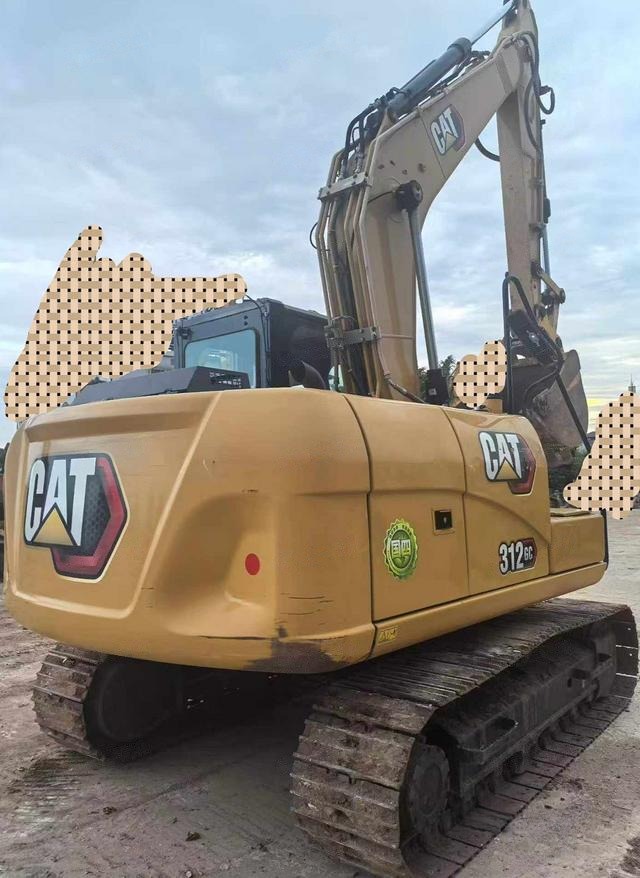
Caterpillar 312GC
- Year
- 2024
- Hours
- 730
- Tonnage
- 11.6 t
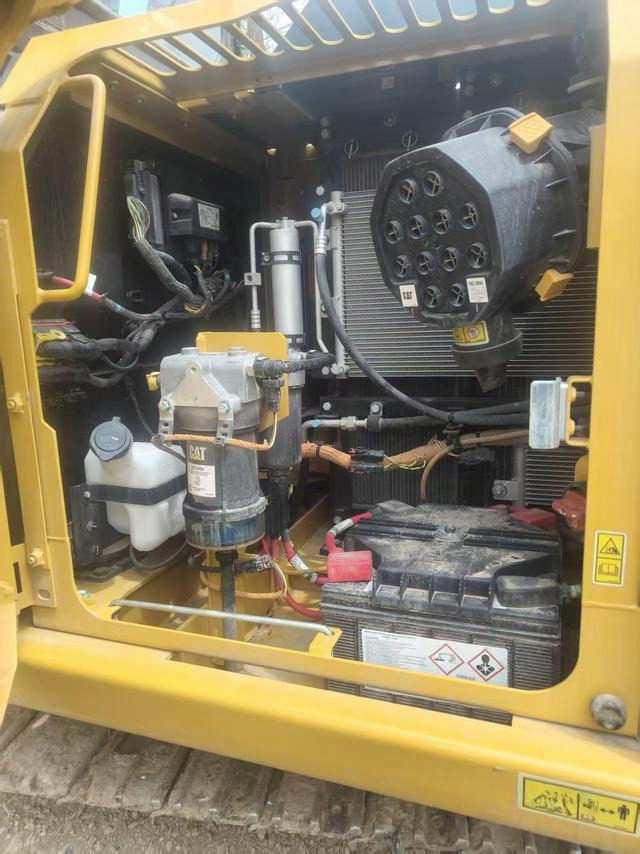
Caterpillar 313GC
- Year
- 2025
- Hours
- 756
- Tonnage
- 13.8 t
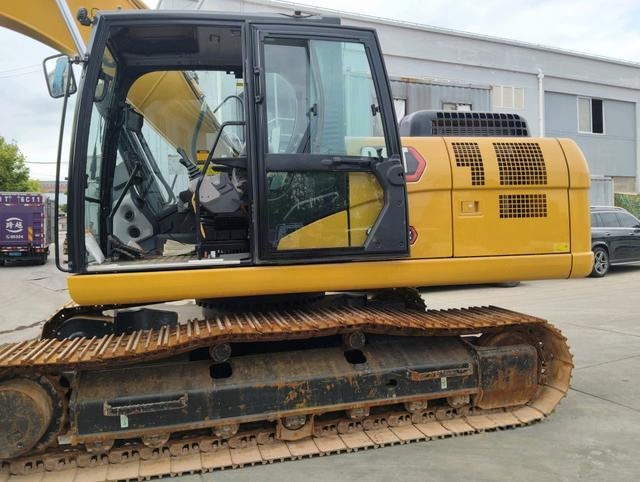
Caterpillar 323GX
- Year
- 2024
- Hours
- 795
- Tonnage
- 21.4 t
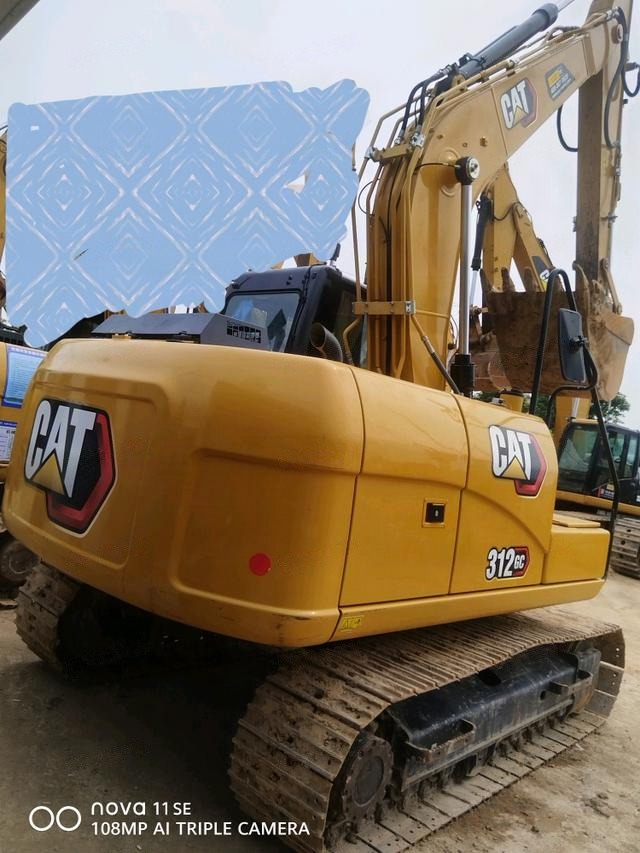
Caterpillar 312GC
- Year
- 2022
- Hours
- 1,100
- Tonnage
- 11.6 t
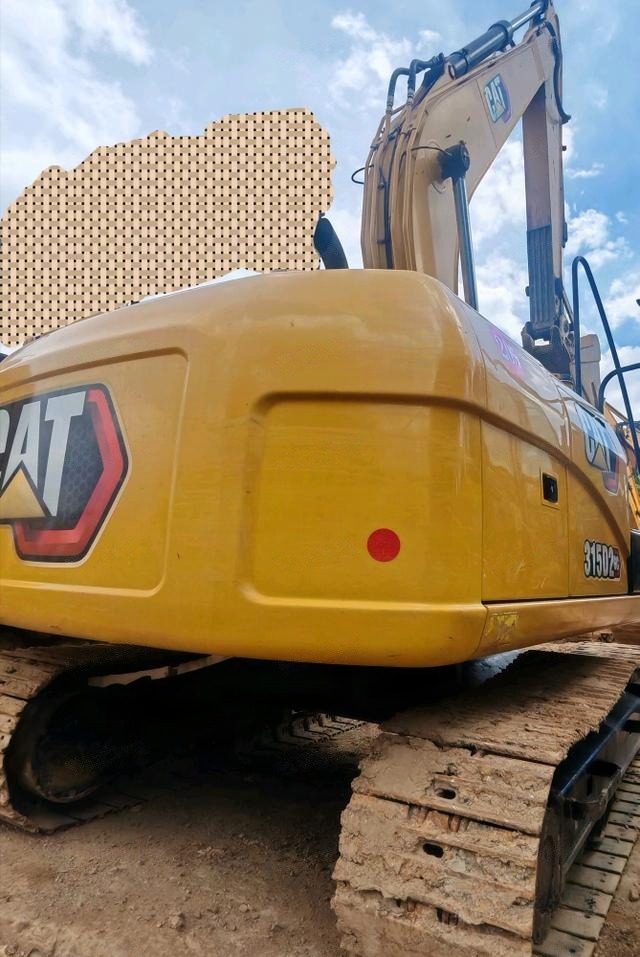
Caterpillar 313D2 GC
- Year
- 2020
- Hours
- 1,600
- Tonnage
- 12.5 t
Frequently asked questions
What is the difference between struck and heaped capacity?
ISO 7451 splits a bucket's volume into the struck volume under the level plane and the top volume above it. The top volume depends on the bucket's shape, so heaped is not struck times two. There is no fixed multiple, so use the maker's own heaped figures.
Is a bigger bucket always better?
No. Hitachi says a large bucket is heavier, can be hard to fill properly and can slow the machine down, which can cut production. Pick the bucket for the material you dig most, then check the machine can lift it.